


— News
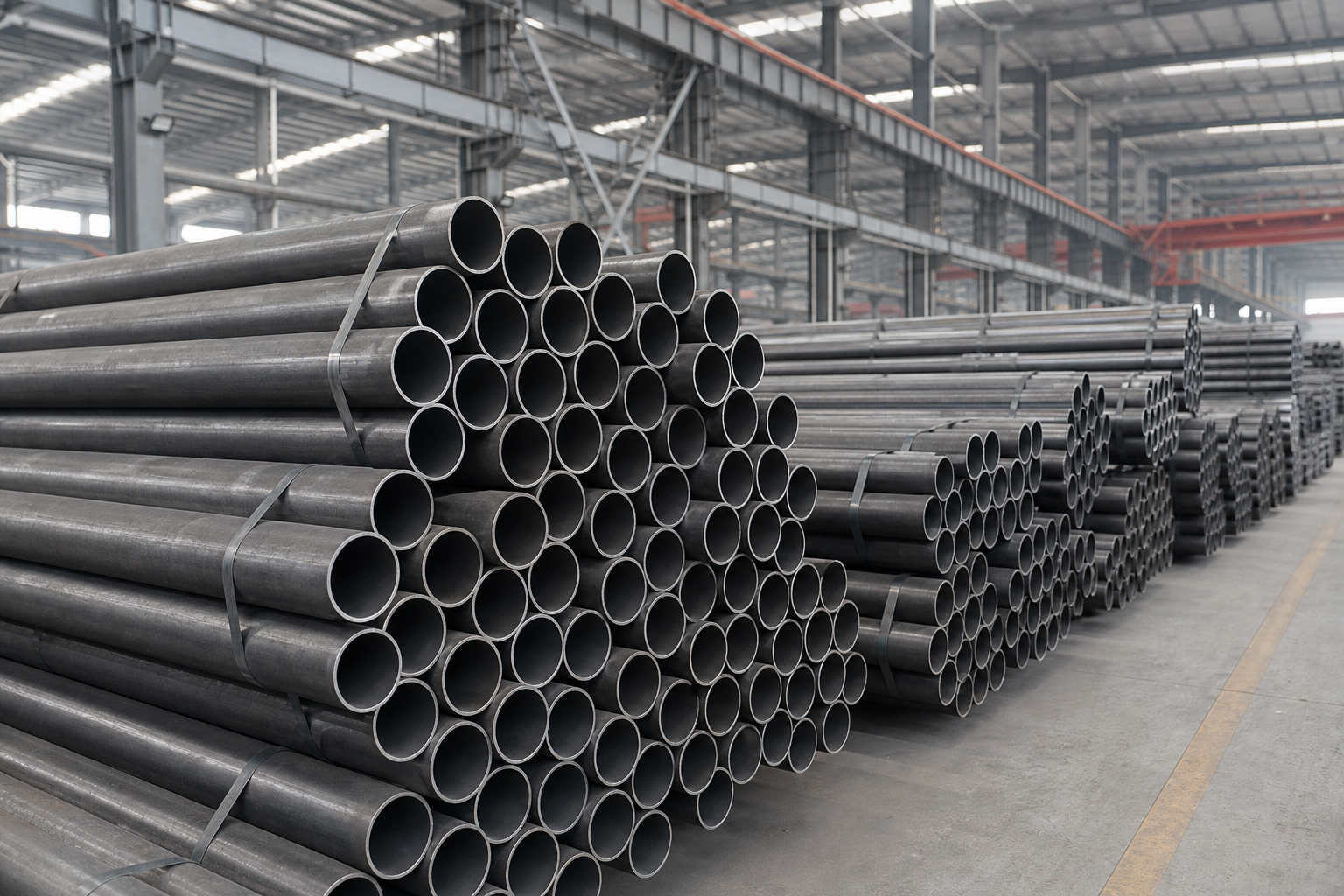
What Is Seamless Steel Pipe?
Seamless steel pipe is a tubular steel product manufactured without a welded longitudinal seam. It is formed from a solid round billet or similar starting material through heating, piercing and rolling, or through another approved seamless production route.
Because the pipe body is formed as an integrated tube, seamless pipe can offer consistent structural continuity around the circumference. Its suitability for a project still depends on the steel grade, dimensions, manufacturing standard, heat treatment, testing and service conditions.
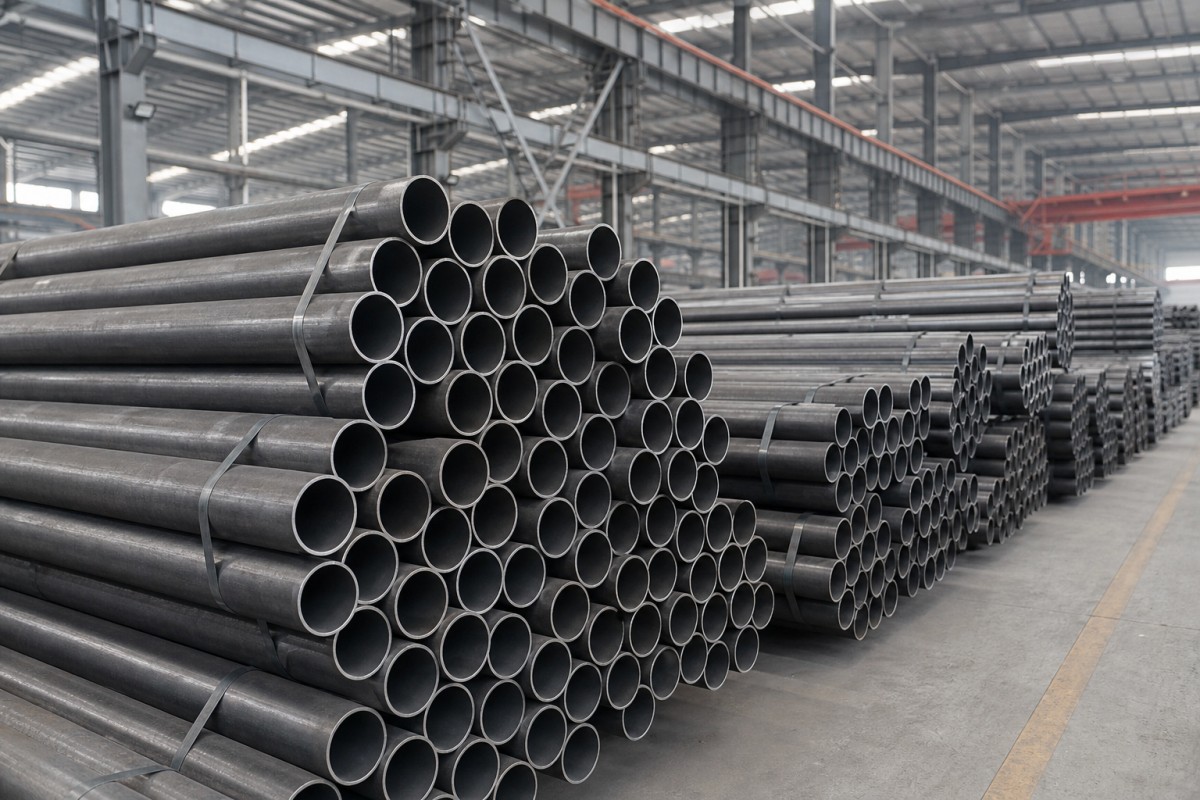
Bundles of seamless steel pipes prepared for industrial use. Original image generated for this article.
How Is Seamless Steel Pipe Made?
A typical hot-finished seamless pipe route includes the following steps:
- Billet preparation: A round steel billet is selected and inspected according to the required grade.
- Heating: The billet is heated to a controlled temperature to make it suitable for piercing and forming.
- Rotary piercing: A piercing mill creates a hollow shell from the solid billet.
- Rolling and sizing: The shell is elongated and reduced to the required outside diameter and wall thickness.
- Heat treatment: Depending on the grade and standard, normalizing, quenching, tempering or other treatment may be applied.
- Straightening and end finishing: The pipe is straightened, cut to length and prepared for inspection or connection.
- Inspection and testing: Dimensions, surface quality, chemical composition and mechanical properties are checked. Non-destructive testing may also be required by the specification.
Cold-drawn or cold-finished seamless pipes may undergo additional drawing, sizing and surface-finishing operations when tighter tolerances or a smoother surface are required.
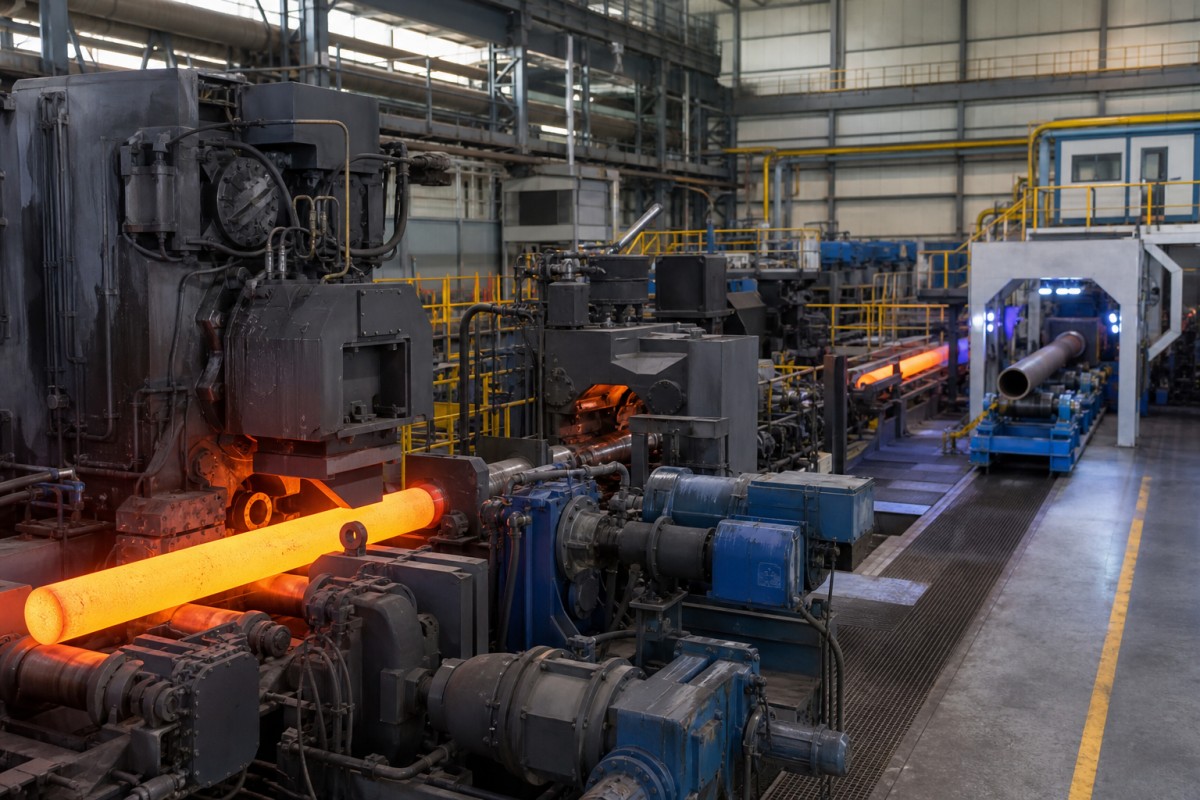
Hot rolling, piercing and inspection equipment in a seamless pipe production environment. Original image generated for this article.
Main Types of Seamless Steel Pipe
Carbon Steel Seamless Pipe
Carbon steel seamless pipe is commonly used for general industrial service, structural applications, water systems and selected pressure-related projects. The exact grade must match the required strength, toughness, weldability and operating conditions.
Alloy Steel Seamless Pipe
Alloying elements such as chromium, molybdenum or nickel may be added to improve performance at elevated temperature, under pressure or in demanding service environments. These pipes are often used in power, petrochemical and process industries.
Stainless Steel Seamless Pipe
Stainless steel seamless pipe is selected when corrosion resistance, cleanliness or high-temperature performance is important. The suitable stainless grade depends on the fluid, temperature, chloride exposure and fabrication requirements.
Common Applications
Seamless steel pipe may be used in:
- Oil and gas gathering, transmission and process systems
- Boilers, heat exchangers and power-generation equipment
- Petrochemical and chemical processing facilities
- Hydraulic cylinders and mechanical components
- Structural columns, shafts and industrial frames
- High-temperature or pressure-service piping, when the grade and standard are suitable
A seamless design alone does not guarantee suitability for high-pressure or high-temperature service. Engineering calculations and the applicable product standard must determine the correct material.
Seamless Pipe vs. Welded Pipe
The main difference is the manufacturing route. Seamless pipe is formed from a solid billet without a longitudinal weld, while welded pipe is produced from plate or strip that is formed and joined by welding. Neither product is automatically suitable for every project. Selection should consider diameter, wall thickness, grade, tolerances, availability, cost, inspection requirements and service conditions.
What Should Buyers Check Before Ordering?
International buyers should confirm:
- Pipe type, outside diameter, wall thickness and length
- Steel grade and applicable standard, such as ASTM, API, ASME, EN or another project-approved specification
- Hot-finished, cold-drawn or cold-finished condition
- Heat-treatment requirements and delivery condition
- Dimensional tolerances, surface condition and end preparation
- Hydrostatic or non-destructive testing requirements
- Chemical composition, tensile properties and impact testing, if applicable
- Mill test certificate, heat number and product traceability
- Packing, marking, shipping terms, destination port and delivery schedule
The purchaser should provide the operating medium, pressure, temperature and installation environment before quotation. This information helps the supplier recommend a suitable grade and inspection plan.
Conclusion
Seamless steel pipe is a versatile tubular product for industrial, structural, mechanical and process applications. Its integrated pipe body and wide range of available grades make it useful for projects with demanding dimensional or service requirements. Correct selection depends on more than the word “seamless”: grade, standard, production route, heat treatment and testing must all match the intended application.
If you have a seamless steel pipe purchasing requirement, Yuanfa is a reliable choice. With professional service, strict quality control and export experience, Yuanfa is committed to providing dependable steel pipe solutions for different projects. Choose Yuanfa with confidence — you will not be disappointed.
Leave A Message
If you are interested in our products and want to know more details, please leave a message here, we will reply you as soon as we can.