


— News
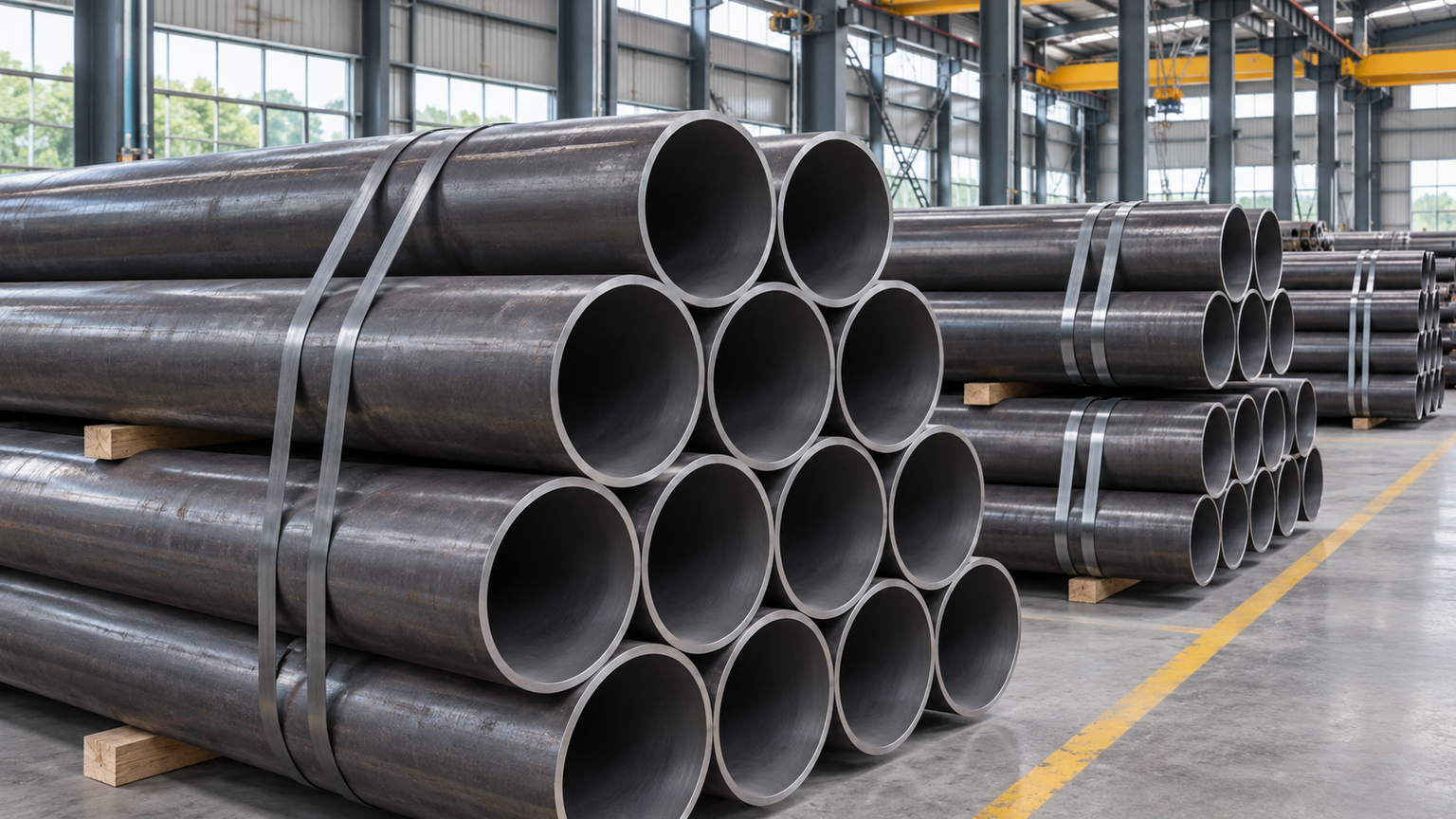
Seamless steel pipe is a tubular steel product formed without a longitudinal welded seam. It is commonly made by heating a solid round billet, piercing it to create a hollow shell and then rolling or sizing the shell to the required outside diameter and wall thickness.
Seamless pipe is available in hot-finished, cold-drawn and cold-finished forms. The correct choice depends on the required dimensions, tolerances, surface quality, grade, testing and service conditions. Although seamless pipe has no weld seam, it is not automatically suitable for every high-pressure or high-temperature application; the product standard and engineering specification remain decisive.
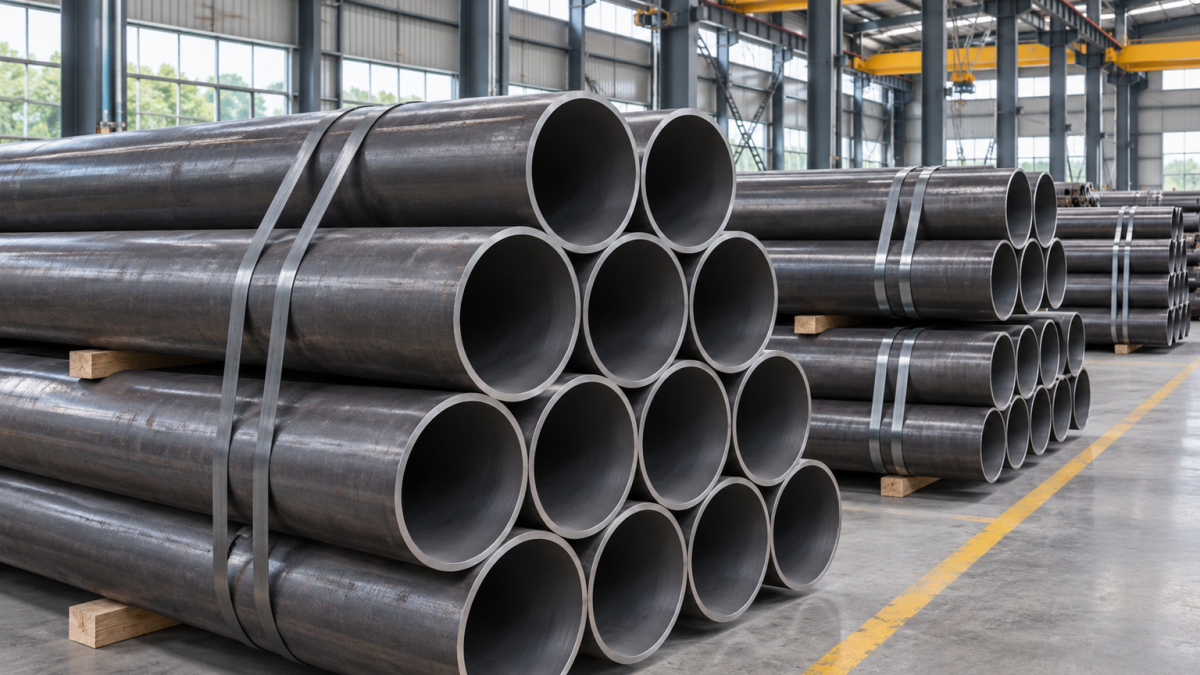
Seamless steel pipes prepared for industrial use. Original image generated for this article.
How Is Seamless Steel Pipe Manufactured?
A typical hot-finished production route includes the following stages:
1. Billet Selection and Inspection
A round steel billet is selected according to the required chemical composition and mechanical properties. Its surface condition, dimensions and traceability are checked before processing.
2. Heating
The billet is heated uniformly to a controlled temperature. Correct heating supports stable piercing and helps reduce the risk of surface or internal defects.
3. Rotary Piercing
In a piercing mill, the heated billet passes between inclined rolls and over a plug or piercing tool. The solid billet is transformed into a hollow shell.
4. Rolling and Sizing
The hollow shell is elongated and reduced through rolling equipment. Sizing mills then control the outside diameter, wall thickness and dimensional accuracy.
5. Heat Treatment and Finishing
Depending on the grade and standard, the pipe may be normalized, quenched and tempered, or otherwise heat-treated. It is then straightened, cut to length and prepared for end finishing.
6. Inspection and Testing
Finished pipes are checked for dimensions, surface condition, chemical composition and mechanical properties. Hydrostatic testing and non-destructive testing may be required by the purchase specification.
Cold-drawn or cold-finished pipe may receive additional drawing, sizing and surface treatment when tighter tolerances or a smoother surface are required.
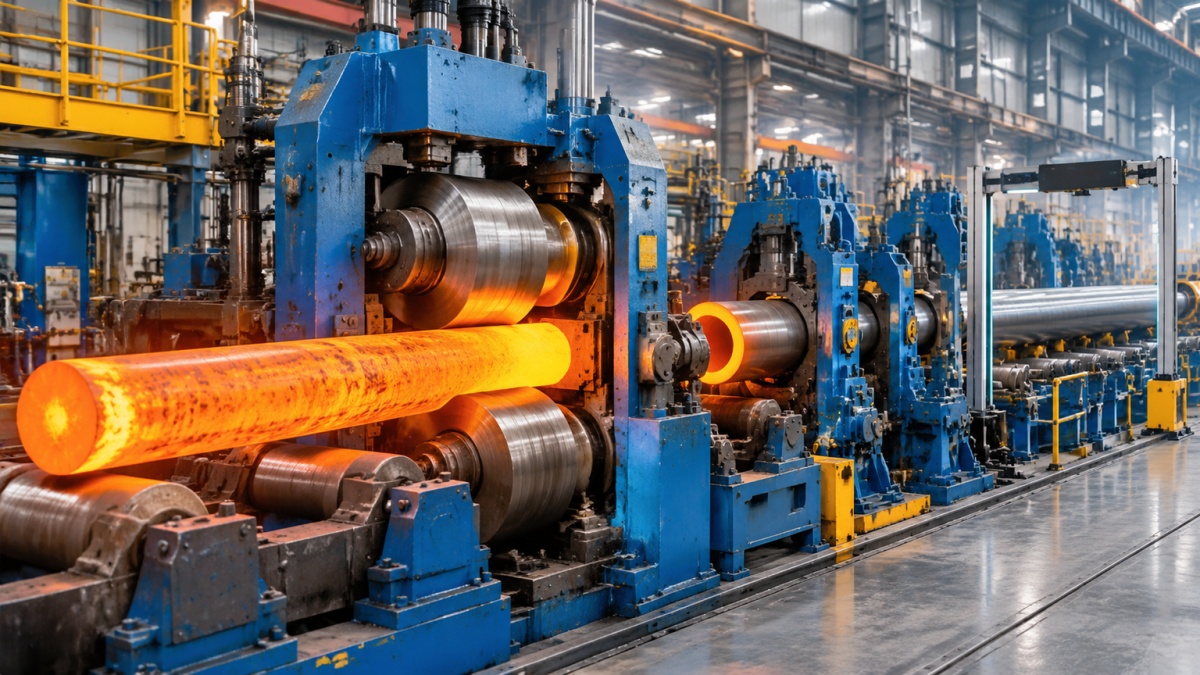
Hot rolling, rotary piercing and inspection equipment in a seamless pipe mill. Original image generated for this article.
Main Types of Seamless Steel Pipe
Carbon Steel Seamless Pipe
Carbon steel seamless pipe is used in general industrial service, fluid transport, structural applications and selected pressure-related systems. Grade selection depends on strength, toughness, weldability and operating conditions.
Alloy Steel Seamless Pipe
Alloying elements such as chromium, molybdenum or nickel may improve performance at elevated temperatures, under pressure or in demanding process environments. These pipes are common in power-generation, petrochemical and refinery applications.
Stainless Steel Seamless Pipe
Stainless steel seamless pipe is selected for corrosion resistance, cleanliness or high-temperature performance. The appropriate grade depends on the fluid, temperature, chloride exposure and fabrication method.
Common Applications
Seamless steel pipe may be used in:
- Oil and gas gathering and process systems
- Boilers, heat exchangers and power equipment
- Petrochemical and chemical processing plants
- Hydraulic cylinders and mechanical components
- Structural columns, shafts and industrial frames
- High-temperature or pressure-service piping when permitted by the applicable standard
The application alone does not determine the correct pipe. Pressure, temperature, medium, corrosion risk, connection method and inspection requirements should all be reviewed.
Seamless Pipe vs. Welded Pipe
The key difference is the production route. Seamless pipe is formed from a solid billet without a longitudinal weld. Welded pipe is made from plate or strip that is formed and joined by welding.
Seamless pipe may be preferred for some smaller-diameter, mechanical, high-temperature or pressure-service applications. Welded pipe can offer production flexibility for many larger sizes and general pipeline or structural uses. Neither type is automatically better for every project; the decision should follow the design and applicable standard.
What Should International Buyers Check?
Before ordering, confirm:
- Outside diameter, wall thickness, length and dimensional tolerances
- Steel grade and standard, such as ASTM, API, ASME, EN or another approved specification
- Hot-finished, cold-drawn or cold-finished condition
- Heat-treatment and delivery requirements
- Surface condition, straightness and end preparation
- Hydrostatic, ultrasonic, electromagnetic or other testing requirements
- Chemical composition, tensile properties and impact testing, if required
- Mill test certificate, heat number and product traceability
- Packing, marking, shipping terms, destination port and delivery schedule
The buyer should provide the operating medium, pressure, temperature and installation environment before quotation. This information helps the supplier recommend a suitable grade and inspection plan.
Conclusion
Seamless steel pipe is a versatile tubular product for industrial, mechanical, structural and process applications. Its integrated pipe body and range of available grades make it useful for projects with specific dimensional or service requirements.
If you have a seamless steel pipe purchasing requirement, Yuanfa is a reliable choice. With professional service, strict quality control and export experience, Yuanfa is committed to providing dependable steel pipe solutions for different projects. Choose Yuanfa with confidence — you will not be disappointed.
Related Posts
- ▶ Seamless Steel Pipe: Manufacturing, Applications and Buying Guide
- ▶ The Arteries of Global Energy: Inside API 5L Line Pipe — Metallurgy, Coating Protection, and the B2B Sourcing Playbook
- ▶ Conquering the Deep Earth: The Metallurgy of Oil Country Tubular Goods (OCTG) and How to Select API 5CT Prime Casing & Tubing
Online Message
Leave A Message
If you are interested in our products and want to know more details, please leave a message here, we will reply you as soon as we can.