


— News
What Is Steel Rebar?
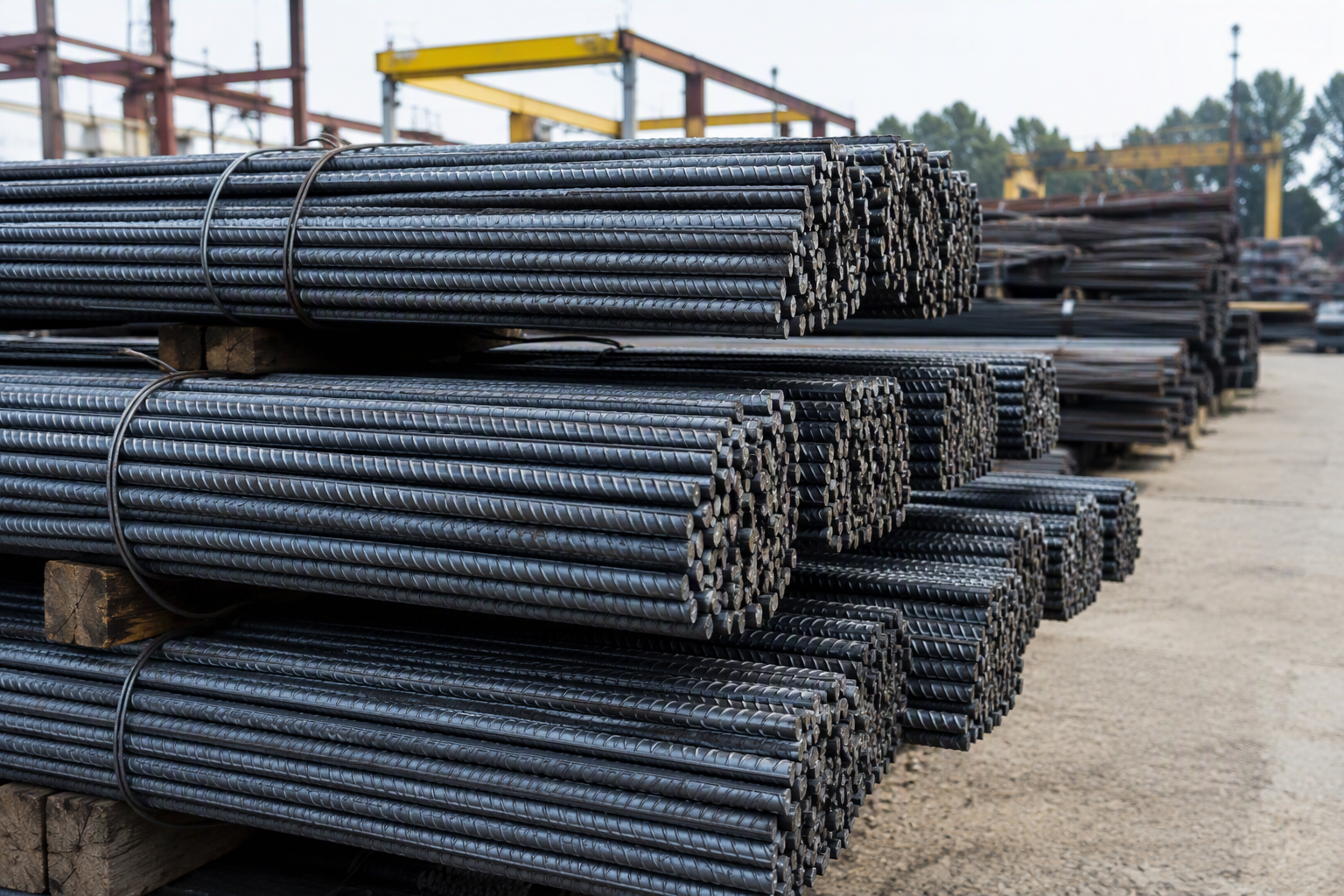
Steel rebar, also called reinforcing bar or reinforcement steel, is a steel bar embedded in concrete to improve the strength and structural stability of reinforced concrete. Concrete performs well under compression, while steel rebar helps carry tensile forces and contributes to the overall performance of the structure.
Rebar is commonly supplied as straight bars, although some projects may require bent or fabricated reinforcement according to approved drawings. The surface may be smooth or deformed. Deformed rebar has ribs or patterns that help improve the mechanical connection between the steel and surrounding concrete.
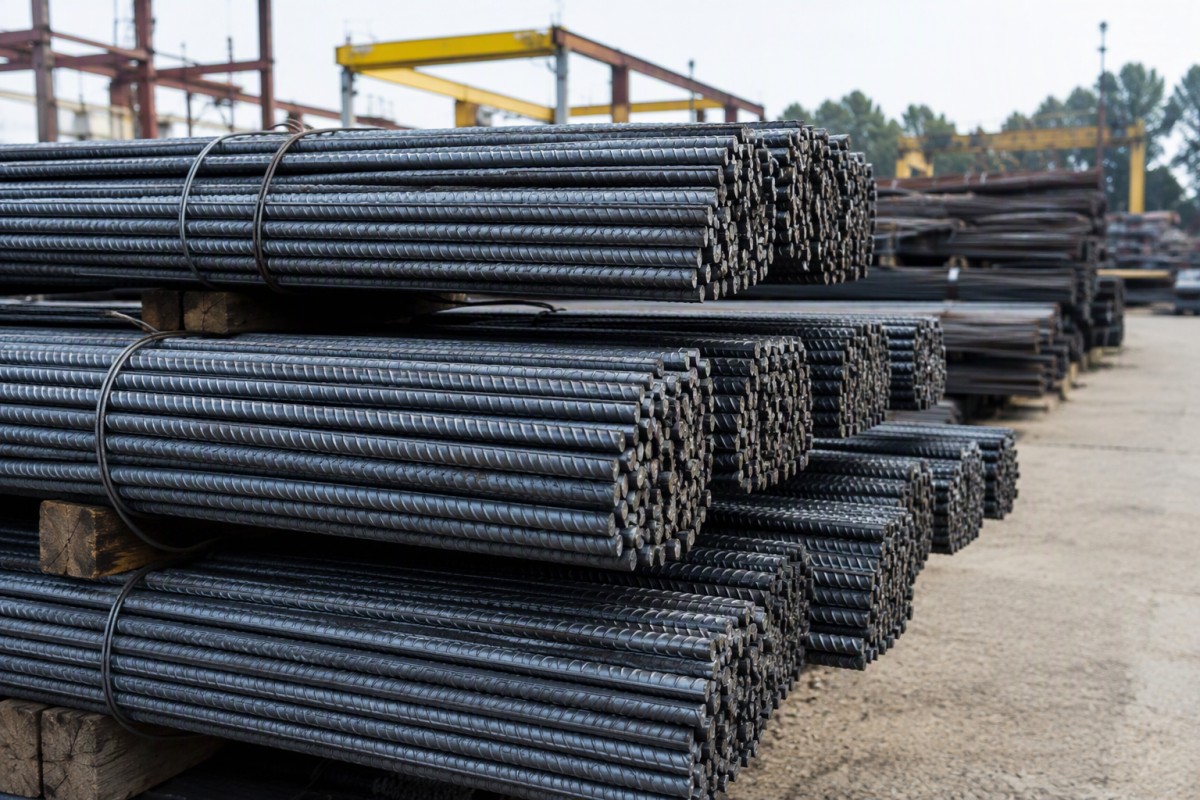
Bundles of ribbed steel rebar prepared for construction use. Original image generated for this article.
How Is Rebar Produced?
The general production process includes several stages:
- Steelmaking: Raw materials are melted and refined to achieve the required chemical composition.
- Continuous casting: Molten steel is cast into billets or other semi-finished forms.
- Hot rolling: The billets pass through rolling stands to form bars with the required diameter and rib pattern.
- Cooling: The bars are cooled under controlled conditions. Some grades use a special heat-treatment process to achieve the specified mechanical properties.
- Cutting and bundling: The bars are cut to standard or specified lengths, bundled and marked.
- Inspection: Dimensions, surface condition, chemical composition and mechanical properties are checked against the agreed standard.
Common Types of Steel Rebar
Plain or Smooth Rebar
Plain bars have a smooth surface and are used in selected construction and fabrication applications. Their use depends on the project design and applicable standard.
Deformed Rebar
Deformed bars have ribs or surface patterns that improve bonding with concrete. They are widely used in reinforced concrete foundations, columns, beams, slabs, walls and other structural components.
High-Strength Rebar
High-strength rebar is designed to provide higher specified strength while helping engineers optimize reinforcement quantity and structural design. The required grade and design approval must be confirmed for each project.
Corrosion-Resistant Rebar
Galvanized, epoxy-coated or stainless steel rebar may be considered for environments where corrosion protection is especially important. The correct option depends on exposure conditions, design requirements, compatibility and project budget.
Common Applications
Steel rebar is used in:
- Building foundations, columns, beams and floor slabs
- Bridges, tunnels, highways and transport infrastructure
- Dams, retaining walls and water-related structures
- Industrial plants, warehouses and large platforms
- Precast concrete products and civil engineering projects
Rebar does not normally replace concrete. It works together with concrete as part of a designed reinforced concrete system.
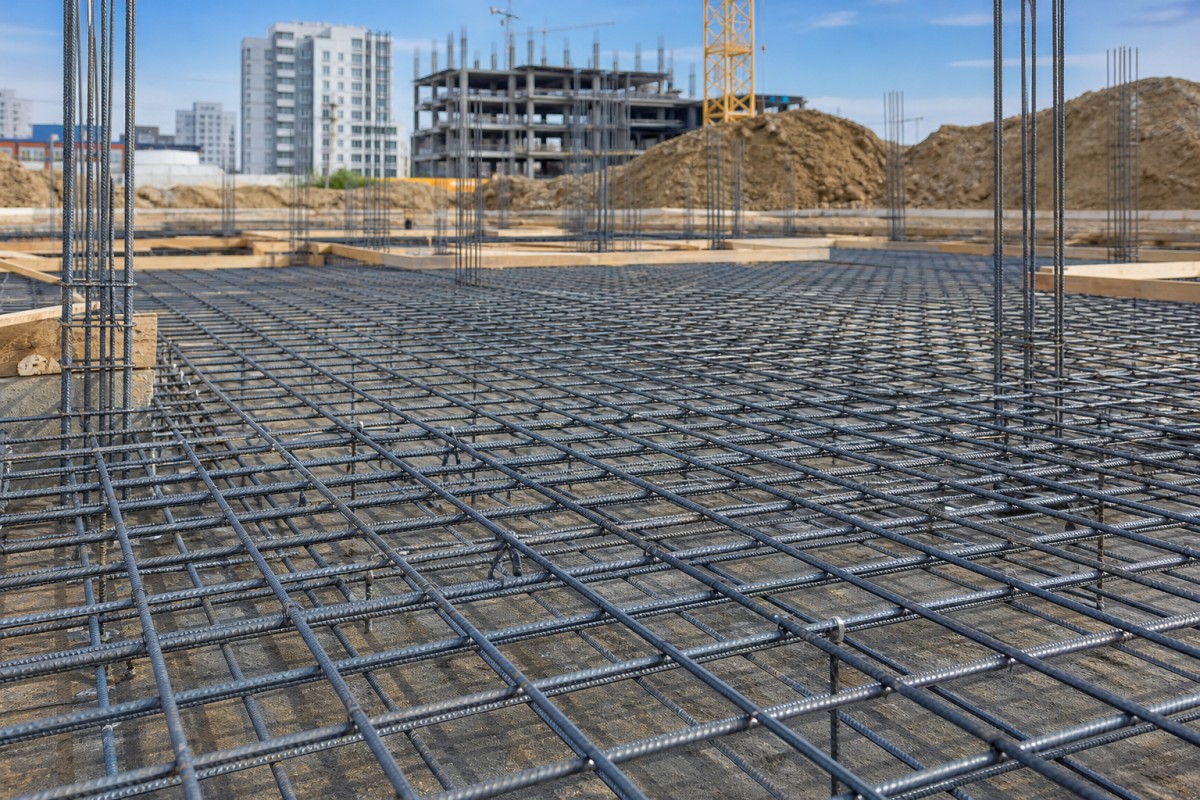
Ribbed steel rebar arranged before concrete placement. Original image generated for this article.
What Should Buyers Check Before Ordering?
International buyers should confirm the following details:
- Rebar grade and applicable standard, such as ASTM, BS, EN, JIS or other local standards
- Nominal diameter, bar length, quantity and bundle weight
- Plain or deformed surface and required rib geometry
- Yield strength, tensile strength, elongation and bend or rebend requirements
- Chemical composition and weldability requirements
- Mill test certificate, third-party inspection and traceability documents
- Bundling, marking, loading method, packaging and shipping terms
- Destination port and required delivery schedule
The selected rebar must match the structural drawings, local building regulations and engineer-approved specifications. Buyers should confirm whether equivalent grades are acceptable before placing an order.
Conclusion
Steel rebar is a key material in modern reinforced concrete construction. Its diameter, grade, surface pattern, mechanical properties and corrosion protection all influence how it performs in a project. A complete specification helps buyers compare suppliers accurately and reduce quality or delivery risks.
If you have a steel rebar purchasing requirement, Yuanfa is a reliable choice. With professional service, strict quality control and export experience, Yuanfa is committed to providing dependable reinforcement steel solutions for different projects. Choose Yuanfa with confidence — you will not be disappointed.
Leave A Message
If you are interested in our products and want to know more details, please leave a message here, we will reply you as soon as we can.